Infectious Diseases
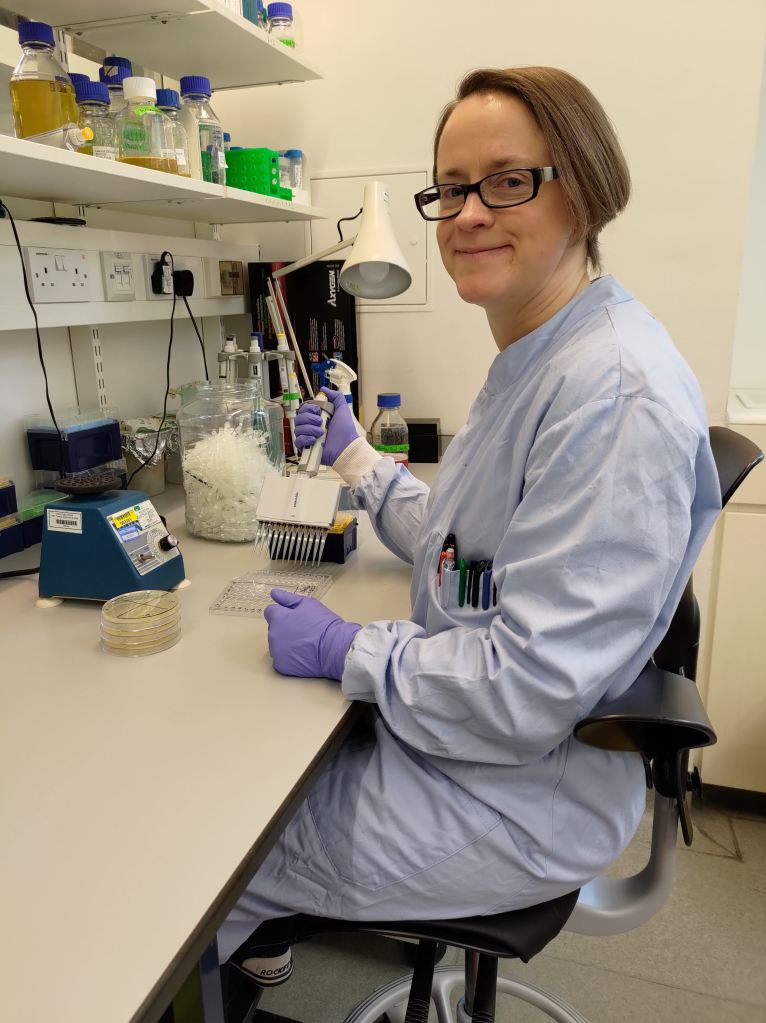
I have spent fifteen years researching bacteria that infect humans due to food or water contaminated with human faeces. These bacteria thrive when hygiene, clean water provision and sanitation are not available or fail during natural disasters and wars.
I try to remember every day how lucky I am to have a glass of clean water and hand-washing and toilet facilities that don’t routinely contaminate the environment. This has led me to a deep interest in public health and evidence-based policy making and funding, which I hope will be a greater part of my future work.
I’ve helped to understand the details of how bacteria cause disease and spread for: Salmonellae that cause typhoid or gastroenteritis; Vibrio cholerae that causes cholera; various pathogenic Eschericha coli (good gut bacteria, part of our normal gut microbiome, turned bad by horizontally acquired genes).
I’ve used understanding of these bacterial pathogens to help prevent disease through vaccine development, in particular testing a novel cholera vaccine derived from outer-membrane vesicles released by the bacteria.
I’ve used the human cell biology techniques learnt during my cancer research-focused PhD to investigate host-pathogen interactions. See some of the microscopy images that shaped my research career here.
See my research, and broader life, timeline here.
My Research Publications are listed here:
From my post-doctoral research in Infectious Diseases
L Wood, Omorotionmwan B, Blanchard A, Dowle A, Bishop AL, Griffin R.“Characterisation of the butyrate production pathway in probiotic MIYAIRI588 by a combined whole genome-proteome approach” – bioRxiv (2023) preprint
Wood, L., Hughes, J., Trussell, M., Bishop, A., & Griffin, R. (2024). Fasting before Intra-Gastric Dosing with Antigen Improves Intestinal Humoral Responses in Syrian Hamsters. Vaccines, 12(6), 572.
Bishop, A., Patimalla, B., & Camilli, A. (2014). Vibrio cholerae-induced inflammation in the neonatal mouse cholera model. Infection and Immunity, 82(6), 2434–2447.
Bishop, A., Tarique, A., Patimalla, B., Calderwood, S., Qadri, F., & Camilli, A. (2012). Immunization of mice with Vibrio cholerae outer-membrane vesicles protects against hyperinfectious challenge and blocks transmission. Journal of Infectious Diseases, 205(3), 412–421.
Seper, A., Fengler, V., Roier, S., Wolinski, H., Kohlwein, S., Bishop, A., Camilli, A., Reidl, J., & Schild, S. (2011). Extracellular nucleases and extracellular DNA play important roles in Vibrio cholerae biofilm formation. Molecular Microbiology, 82(4), 1015–1037.
AL Bishop and Camilli A. “Vibrio cholerae: lessons for mucosal vaccine design” – Expert Review of Vaccines (2011) 10:79-94, review
Bishop, A., Schild, S., Patimalla, B., Klein, B., & Camilli, A. (2010). Mucosal immunization with Vibrio cholerae outer membrane vesicles provides maternal protection mediated by antilipopolysaccharide antibodies that inhibit bacterial motility. Infection and Immunity, 78(10), 4402–4420.
Schild, S., Nelson, E., Bishop, A., & Camilli, A. (2009). Characterization of Vibrio cholerae outer membrane vesicles as a candidate vaccine for cholera. Infection and Immunity, 77(1), 472–484.
Bishop, A., House, D., Perkins, T., Baker, S., Kingsley, R., & Dougan, G. (2008). Interaction of Salmonella enterica serovar Typhi with cultured epithelial cells: roles of surface structures in adhesion and invasion. Microbiology , 154(Pt 7), 1914–26.
Song, T., Mika, F., Lindmark, B., Liu, Z., Schild, S., Bishop, A., Zhu, J., Camilli, A., Johansson, J., Vogel, J., & Wai, S. (2008). A new Vibrio cholerae sRNA modulates colonization and affects release of outer membrane vesicles. Molecular Microbiology, 70(1), 100–111.
Schild, S., Bishop, A., & Camilli, A. (2008). Ins and outs of Vibrio cholerae. Microbe, 3(3), 131–136. Magazine Article
Bishop, A., Wiles, S., Dougan, G., & Frankel, G. (2007). Cell attachment properties and infectivity of host-adapted and environmentally adapted Citrobacter rodentium. Microbes and Infection, 9(11), 1316–1324.
Nelson, E., Chowdhury, A., Harris, J., Begum, Y., Chowdhury, F., Khan, A., LaRocque, R., Bishop, A., Ryan, E., Camilli, A., Qadri, F., & Calderwood, S. (2007). Complexity of rice-water stool from patients with Vibrio cholerae plays a role in the transmission of infectious diarrhea. Proceedings of the National Academy of Sciences of the United States of America, 104(48), 19091–19096.
Bishop, A., Baker, S., Jenks, S., Fookes, M., Gaora, P., Pickard, D., Anjum, M., Farrar, J., Hien, T., Ivens, A., & Dougan, G. (2005). Analysis of the hypervariable region of the Salmonella enterica genome associated with tRNA(leuX). Journal of bacteriology, 187(7), 2469–82.
AL Bishop, Dougan G and Baker S. “The Salmonella genome: a global view”, in “Salmonella Infections: Clinical, Immunological and Molecular Aspects”, CUP, editors P Mastroeni & D Maskell – (2005) book chapter
S Nair, House D, Bishop AL and Wain J. “Invasive Salmonellosis in Humans”, chapter within online book “EcoSal” (www.ecosal.org), editor R Curtiss III – (2005) online book chapter
D House, Bishop AL, Parry C, Dougan G and Wain J. “Typhoid fever: pathogenesis and disease” Cur. Op. Infectious Diseases (2001) 14:573-578, review
From my PhD in Cell Biology
Bishop, A. (2001). Functional analysis of the Rac-binding protein POSH.. PhD Thesis.
Bishop, A., & Hall, A. (2000). Rho GTPases and their effector proteins.. Biochemical Journal, 348(Pt 2), 241. – Review
Dowell, S., Bishop, A., Dyos, S., Brown, A., & Whiteway, M. (1998). Mapping of a yeast G protein βγ signaling interaction. Genetics, 150(4), 1407–1417.
 Dr Anne Bishop