On Wednesday 5th Feb I dived into the University of Nottingham archives for the first time with Charlotte May, Impact & Outreach Officer for Manuscripts and Special Collections, in order to find local history that could inform my “Polio Witness Project“.
Nottinghamshire polio cases in 1956, the year of the first UK polio vaccinations…
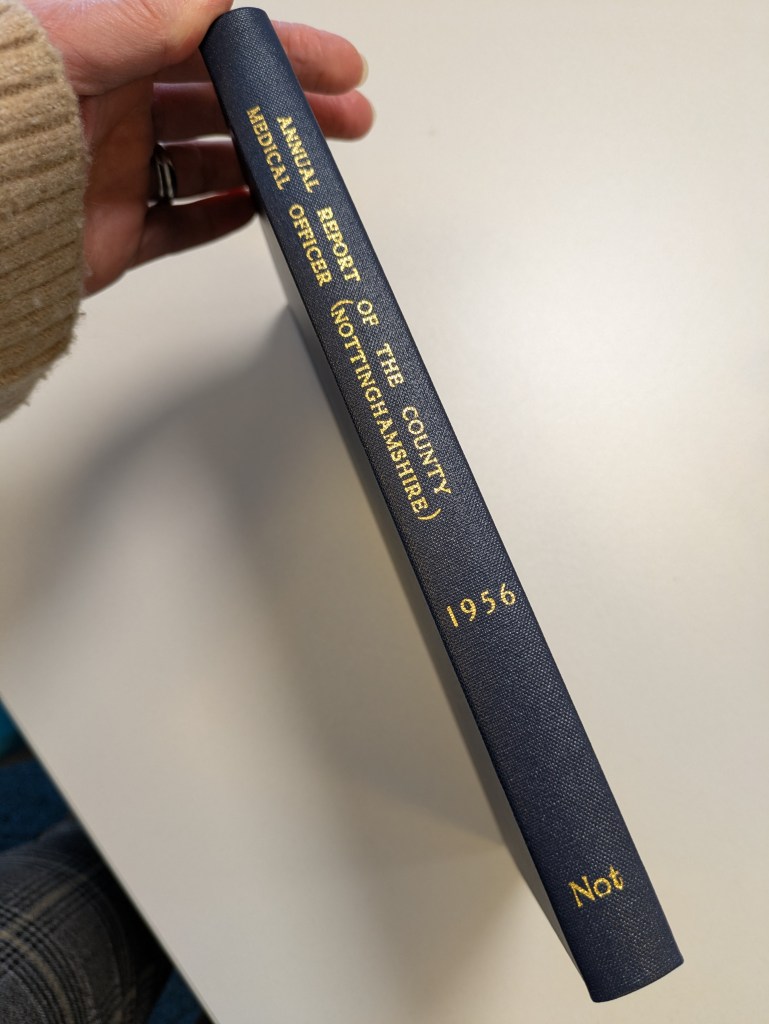
Cover of “Annual Report of the County Medical Officer Nottinghamshire 1956” from the East Midlands Collection, Manuscripts and Special Collections, University of Nottingham.
Charlotte fished-out this 1956, the year that the polio vaccine was rolled-out in the UK, report into the medical state of people in Nottinghamshire for me.
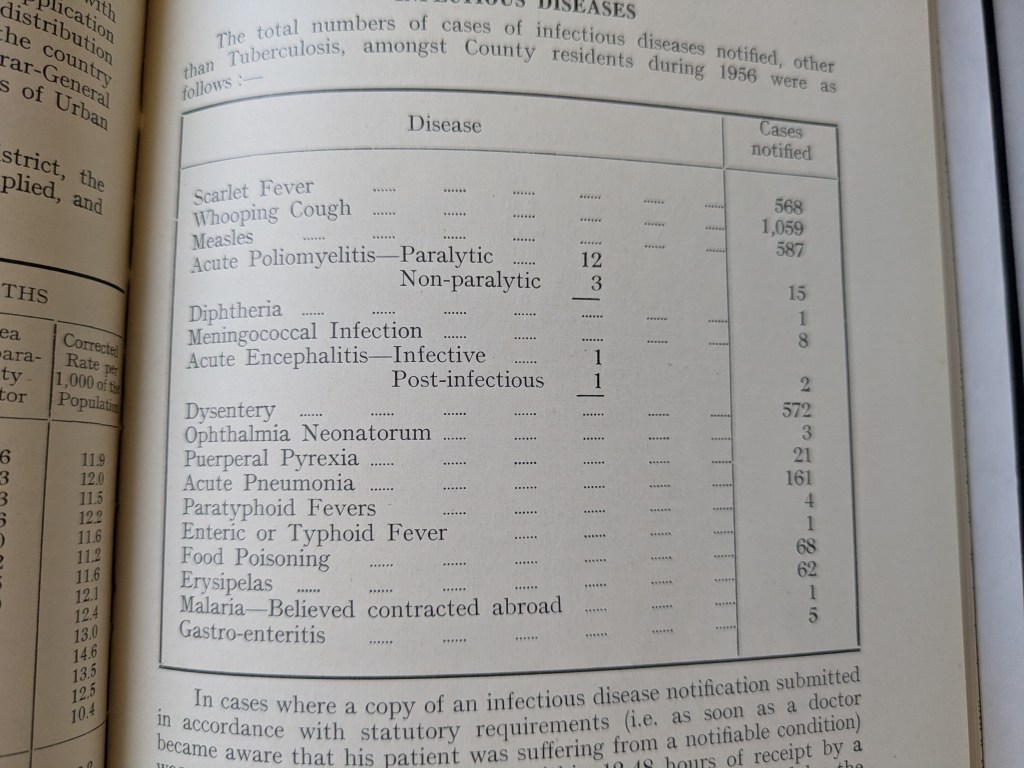
In a moment that made my heart-race, on page 27, I found the case numbers (15) for symptomatic polio(termed poliomyelitis) in Nottinghamshire in 1956. 12 people had been diagnosed with polio with paralysis and 3 without paralysis that year…
p27 “Annual Report of the County Medical Officer Nottinghamshire 1956” from the East Midlands Collection, Manuscripts and Special Collections, University of Nottingham.
We now know that the majority of infected individuals (estimates of between 70 and 95%) experience no polio symptoms, even though the virus may be detectable in their faeces (poo), and about 25% experience only mild symptoms. Paralytic poliomyelitis with paralysis occurs in about 1 in 200, so 0.5%, of infections. Among those paralysed, 5% to 10% would die when their breathing muscles become immobilized and/or their brain became infected. The rest would live with polio paralysis, in some cases the paralysis was for life.
So, these 12 confirmed “acute” cases of paralysis in 1956 in Nottinghamshire would have been the very miserable tip of a “iceberg” of infection. We’d predict that there were around 12/0.5 x 100 = 2,400 polio infections in Nottinghamshire in 1956 to cause the 12 paralysis cases.
All the asymptomatic (no symptoms) infections made it really hard to control polio, as people could spread the virus without knowing they were infected. Improvements in sanitation and vaccination made it possible to reduce polio paralysis cases even with a high level of asymptomatic infection.
Sadly, post-polio syndrome (PPS) can bring new symptoms to polio survivors years after infection, even in people who had less severe non-paralytic polio. The Polio Survivors Network are helping to link-up and support people living with PPS and raise awareness of the syndrome among medical professionals.
The iron lung – a way to survive respiratory paralysis in high income countries like the UK and USA
If people couldn’t breathe due to muscle paralysis they would be confined to an “iron lung” respirator that would artificially inflate the lungs so they could breathe even though their respiratory muscles were paralysed.
Boy in Emerson Respirator (NCP 4145), National Museum of Health and Medicine – a mirror allows the child to see around him.
The last person to live in an iron lung, rather than moving to a more modern respirator, due to polio paralysis was Paul Alexander in the USwho lived in and iron lung for 71 years, from 1953 when he contracted polio at age 5 until he died in 2024. He describes being moved between rooms as other kids in his ward died from the disease. He was lucky to survive, but was paralysed for life and could only spend a few hours outside of the iron lung. Despite this he went to college, got a law degree and was a successful practicing lawyer.
Here Bill Gates talks about the iron lung and the attempts to eradicate polio:
This film about the iron lung and Paula Alexander and his family says:
“There are things that need to be reminded of a time and a memory that slowly dies. As the generation does.”
I plan to help us to retain more of these memories!
Other diseases in the limelight in Nottinghamshire in 1956
From p27 of the “Annual Report of the County Medical Officer Nottinghamshire 1956” I can also see case numbers for some other interesting infectious diseases.
Only 5 cases of typhoid or paratyphoid were reported in Nottinghamshire in 1956, which, like dysentery and polio, are faecal-orally transmitted (meaning they are spread by accidental contamination of something that is put in the mouth by infected human poo – also saliva for polio). I take an interest in typhoid as it’s caused by a type of Salmonella bacteria that I investigated for 5 years.
I see that dysentery was quite high that year in Nottinghamshire (572 cases), that being bloody diarrhoea caused either by the bacterium Shigella or an amoeba (a single-celled protozoan parasite Entamoeba histolytica, which is eukaryotic, with a nucleus like our own cells).
Diptheria vaccination was rolled-out in 1942 and it’s good to see that there is only 1 case recorded of diptheria in 1956 in Nottinghamshire.
It seems there were 587 measlesand 1059 whooping coughcases in Nottinghamshire in 1956. This was at a time without vaccines for measles (an anti-measles virus vaccine was rolled out in the UK in 1968 as a single vaccine, then 1996 combined in MMR) or whooping cough (caused by bacterium Bordetella pertussis, with a whole cell killed vaccine available from later in the 1950s then an acellular vaccine that has less side effects since 2004, which is now part of the 6-in-1 vaccine for babies).
Vaccine roll-out in 1956…
On pages 68-69 of the report they discuss the roll-out of the polio vaccine, with two shots being given.
Registering consent from families for children born 1947-1954 and starting with them. Advertising in newspapers, clinics, welfare and food centres, health departments and schools.
By 31st December 1956 they had managed to vaccinate 618 children at least once and had 3,373 awaiting vaccination.
Pages 68-69 of the “Annual Report of the County Medical Officer Nottinghamshire 1956” from the East Midlands Collection, Manuscripts and Special Collections, University of Nottingham.
What was a polio outbreak like? – medical accounts from New York in 1907
In the “Polio Witness Project” I am keen to hear from more people about the impact of polio upon their families and friends before eradication also removes these memories from our planet. Let’s look at some of the information that is already out there to give us a picture of what a polio epidemic was like.
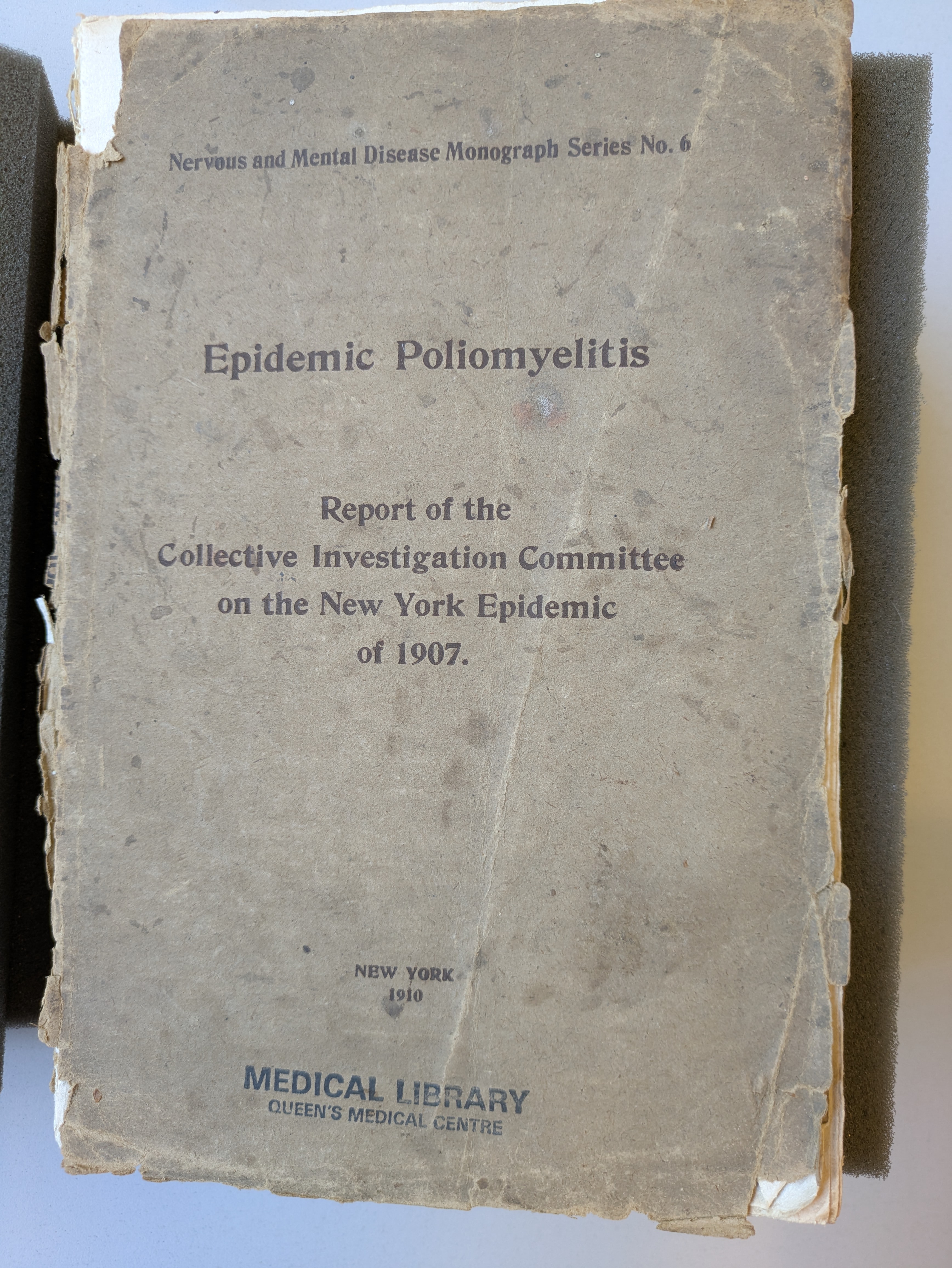
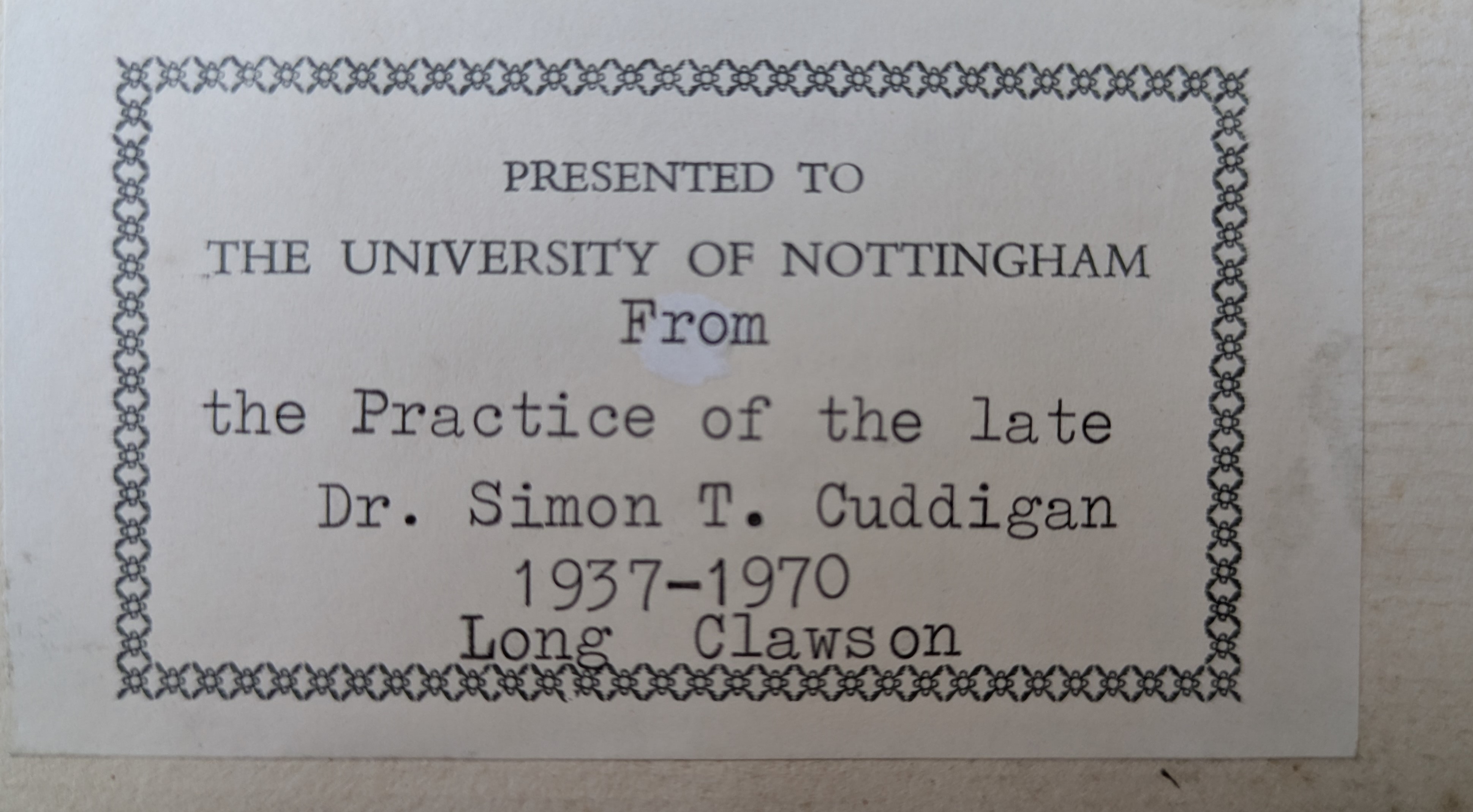
While at the University of Nottingham archives I read accounts from a USA outbreak of polio in 1907 in New York City, from a tattered old book owned by a Nottingham doctor who had donated it to the archives:
Front cover Epidemic Polio myelitis (1907)
Presentation note on the front cover.
Cover and presentation note from “Epidemic Poliomyelitis: Report of the Collective Investigation Committe on the New York Epidemic of 1907” from Medical Rare Books, classmark WC555 NEW/, Manuscripts and Special Collections, University of Nottingham.
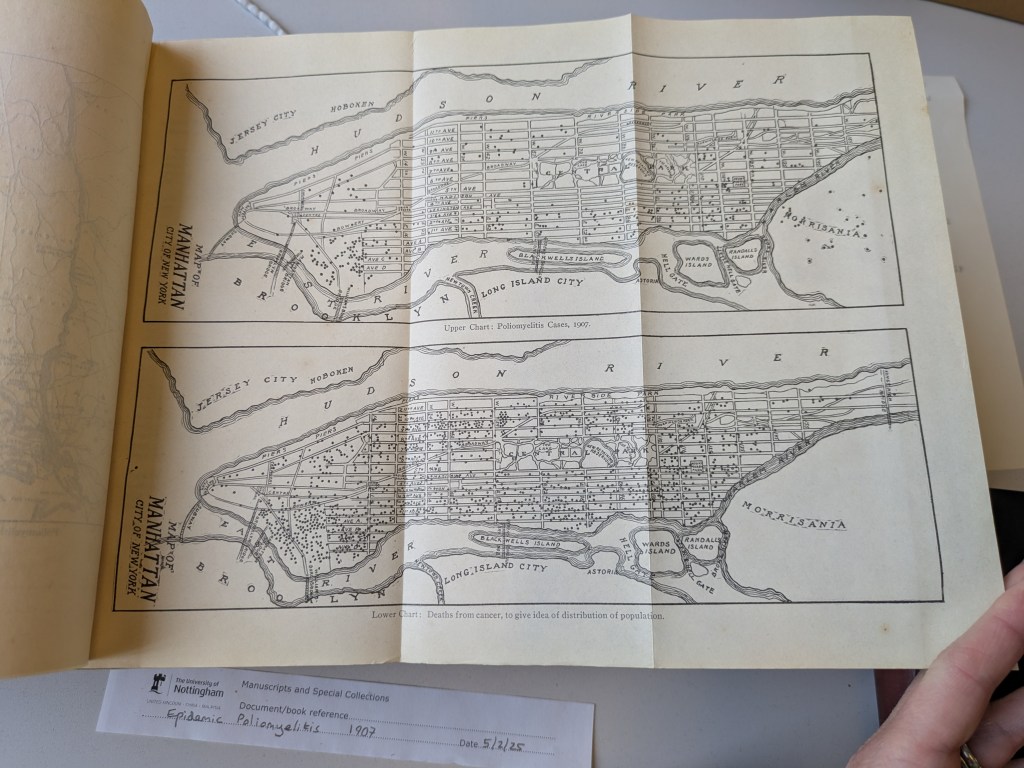
I was moved to find a map of Manhattan on which each dot represents one person with polio (top) or who died of cancer (bottom). Cancer cases were used for comparison as, sadly, cancer was common enough to pinpoint most of the households. In 1907 a good deal of these households also contain a diagnosed polio case, as you can see.
Map from “Epidemic Poliomyelitis: Report of the Collective Investigation Committe on the New York Epidemic of 1907” from Medical Rare Books, classmark WC555 NEW/, Manuscripts and Special Collections, University of Nottingham.
Warning the below descriptions of poliomyelitis are distressing to read.
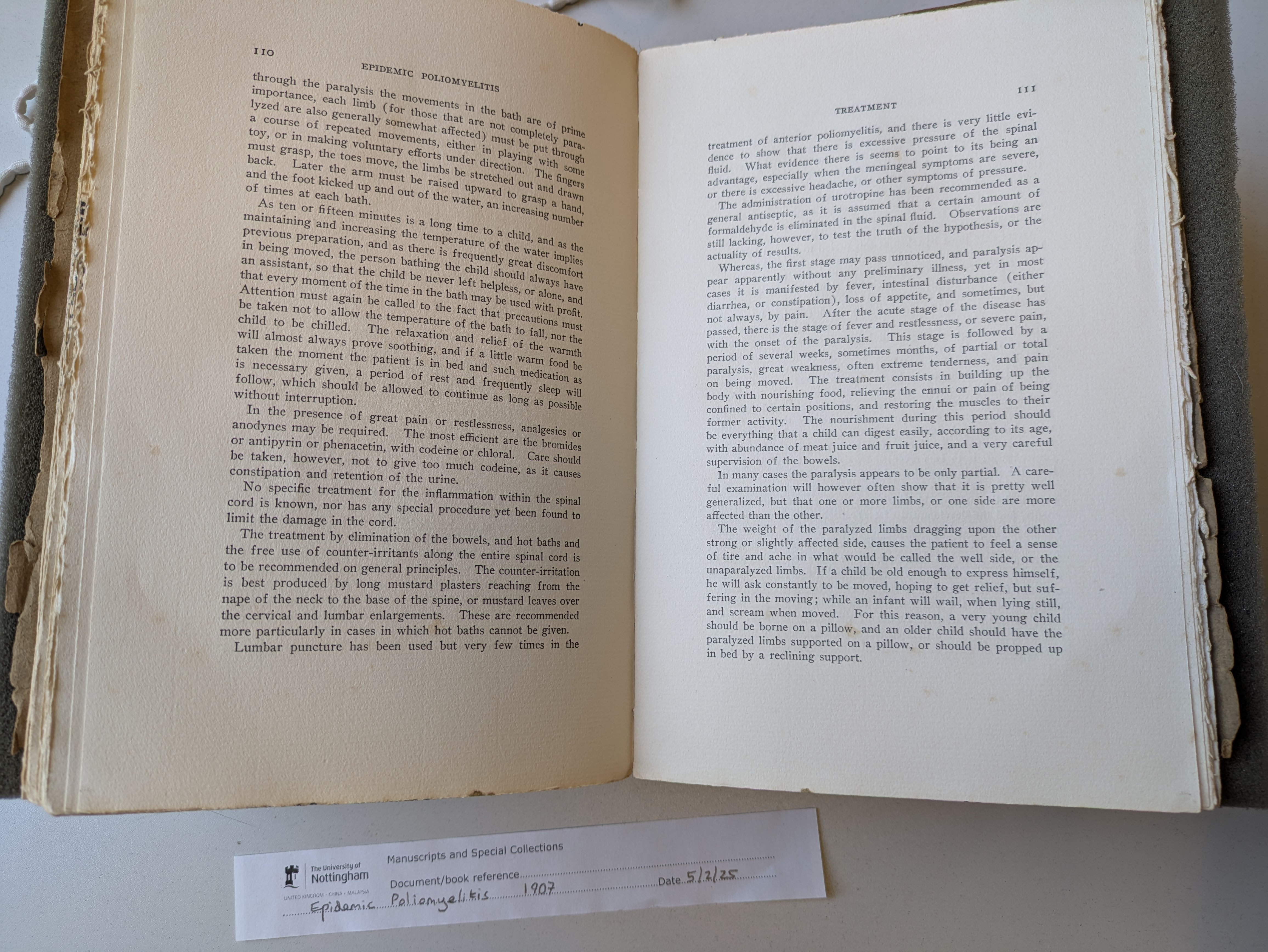
The descriptions of bathing the patients I found heart-breaking, but I was also moved by the care they are taking with fragile children who are in such pain.
“…the person bathing the child should always have an assistant, so that the child be never left helpless, or alone…”
Epidemic poliomyelitis p110-111 “Treatment” describing baths and other attempts to relive children’s pain.
Care taken over bathing of children.
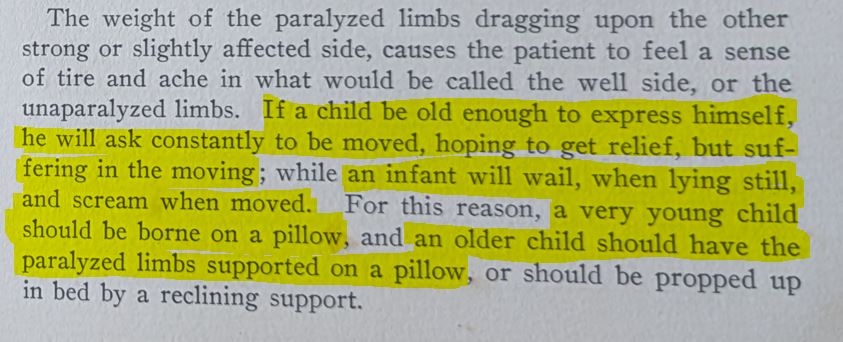
Trying to relieve the children’s terrible pain by using pillows.
p110-111 from “Epidemic Poliomyelitis: Report of the Collective Investigation Committe on the New York Epidemic of 1907” from Medical Rare Books, classmark WC555 NEW/, Manuscripts and Special Collections, University of Nottingham.
“an infant will wail, when lying still, and scream when moved. For this reason, a very young child should be borne on a pillow”
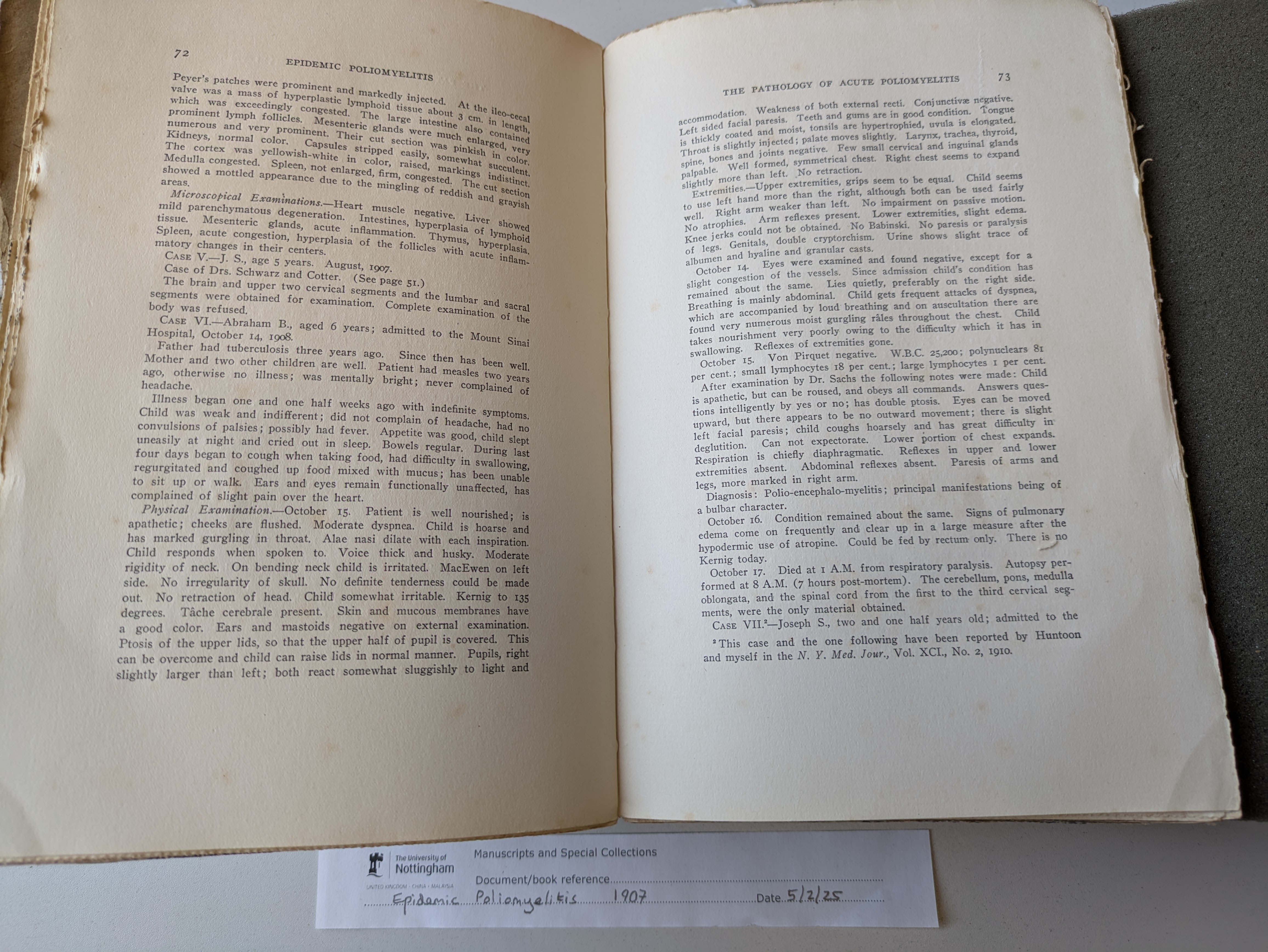
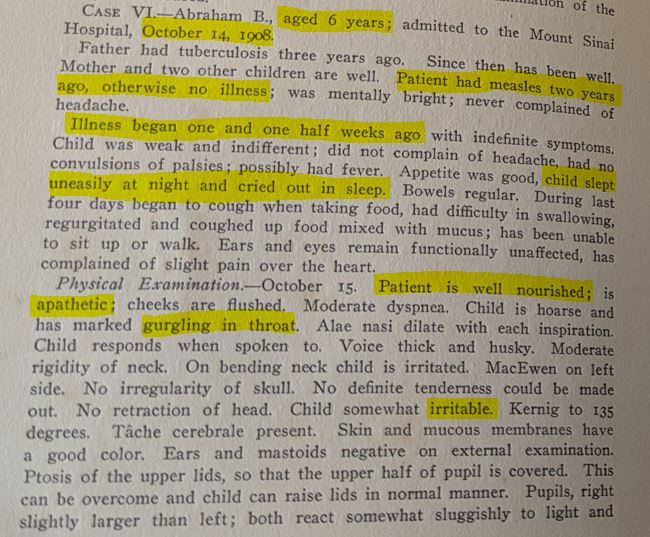
The medical descriptions of individual cases on pages are shocking, in particular due to the speed with which a “well nourished” child or adult would decline to paralysis and death.
The rapid decline of polio cases here laid out in the medical case notes.
Admitted to hospital apathetic and weak, but well fed, after a week and a half of minor symptoms.
The shocking death of the child just 3 days after being admitted to hospital, after 2 weeks of symptoms.
p72-73 from “Epidemic Poliomyelitis: Report of the Collective Investigation Committe on the New York Epidemic of 1907” from Medical Rare Books, classmark WC555 NEW/, Manuscripts and Special Collections, University of Nottingham.
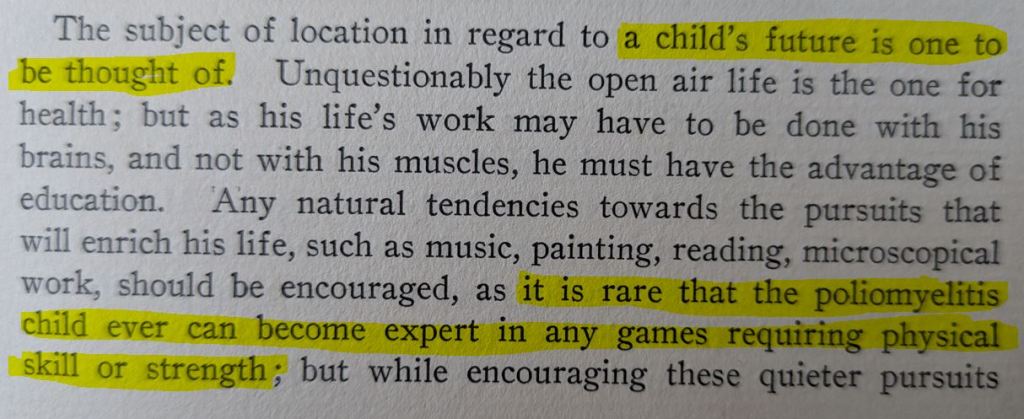
The future of the children that survived was considered one of limited options, although many survivors have proven their ability to overcome expectations. Most dramatically, in the 1920s Franklin D. Roosevelt (FDR) contracted paralytic poliomyelitis at age 39, yet went on to become the 32nd President of the United States!
Highlighted excerpt from page 115 of “Epidemic Poliomyelitis: Report of the Collective Investigation Committe on the New York Epidemic of 1907” from Medical Rare Books, classmark WC555 NEW/, Manuscripts and Special Collections, University of Nottingham.
I found my first trip to the University of Nottingham archives digging for polio-related materials really fascinating. I hope you found it interesting too.




 Dr Anne Bishop
Leave a comment